On Tuesday, June 17, 2025, an extraordinary event celebrating the Cistercian heritage took place in Wągrowiec—one of the events organized as part of Poland’s EU Council Presidency and the “Cisterscapes—Cistercian Landscapes Connecting Europe” project. Under the theme “The Cistercian Heritage as a Path to Europe’s Future” and under the patronage of the Minister for European Affairs, we brought together representatives of local governments, cultural institutions, scholars, and history enthusiasts to celebrate the awarding of the prestigious European Heritage Label to the Łekno/Wągrowiec monastic landscape.
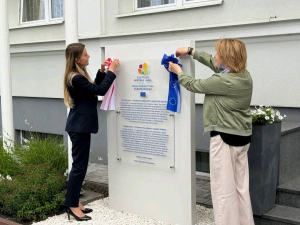
Ceremonial Unveiling of the Information Signs
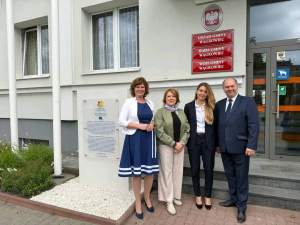
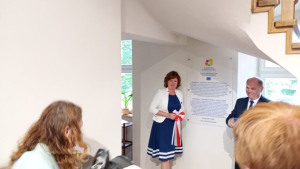
As part of the event, two informational signs were unveiled, providing information about the awarding of the European Heritage Label to the Łekno/Wągrowiec monastic landscape. The plaque on Cysterska Street, next to the Wągrowiec municipal office, was unveiled by the mayor of Wągrowiec, Dr. Małgorzata Chmielarz, together with Alexandra Baier, the European Heritage Label coordinator from the Bamberg district. The second plaque, installed in the Regional Museum building on Opacka Street, was unveiled by the mayor of Wągrowiec, Alicja Trytt, and the district administrator of Wągrowiec, Tomasz Kranc.
Presentations and Panel Discussion
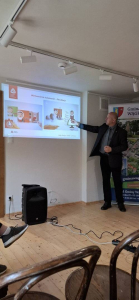
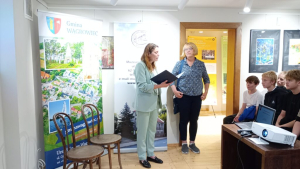
Presentations on the topic of cultural heritage were held in the museum’s lecture hall:
– Dr. Iwona Liżewska and architect Tomasz Błyskosz from the National Institute of Cultural Heritage:
“DoM – Cultural Heritage Right Next to Me. On Cultural Heritage Management in Communities.”
– Marcin Moeglich, historian at the Regional Museum in Wągrowiec:
“The Ł3 Klasztorek Archaeological Site in Łekno/Tarnów Pałucki—What’s Next?”
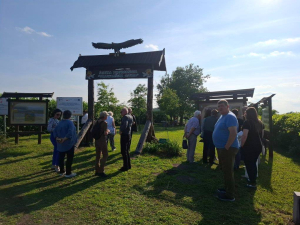
Following the presentations and discussion, an excursion took place during which participants were able to experience the Cistercian heritage up close: a tour of the former Cistercian monastery in Wągrowiec, St. Nicholas Church in Tarnów Pałucki, and the Ł3 “Klasztorek” archaeological site. The event concluded with a tasting of regional products at the Center for Environmental Education in Bracholin and a nature walk along the “Bracholińska Ostoja” nature trail.
Why is this legacy important?
The European Heritage Label is awarded to sites and monuments that have had a significant impact on European culture and history. By founding a monastery in Łekno in the mid-12th century and later in Wągrowiec, the Cistercians created a network of cross-border contacts and developed innovative techniques in the fields of agriculture, livestock farming, and construction. To this day, many of their works have been preserved in the region’s landscape: polder systems, drainage systems, forested areas, land-use plans, etc., which bear witness to the medieval economic practices of the Order of Monastic Farmers.
By participating in the international project “Cisterscapes—Cistercian Landscapes Connecting Europe,” the municipality and the city of Wągrowiec have committed themselves to protecting and promoting this heritage.
The event was held under the patronage of the Minister for European Affairs during Poland’s EU Council Presidency in 2025, as well as the Voivode of Greater Poland, the State Archives in Poznań, the County Administrator of Wągrowiec, and the National Institute of Cultural Heritage.
Organizers:
Municipality of Wągrowiec | City of Wągrowiec | Regional Museum in Wągrowiec | Association of Friends of the Pałuck Region