
Velehrad
Date of foundation: 1205 (order number 547 according to Janauschek)
Date of dissolution: 1784, 1890 – 1950, revived in 1990
Filiation / mother monastery: Morimond-Ebrach / Plasy monastery
Daughter monastery: Smilheim monastery
Margrave Jindřich founded the first Moravian Cistercian monastery on the banks of the Salaška, in the southern part of the densely wooded Chřiby Mountains in a very favorable location. The Slavic apostles Cyril and Methodius, to whom the monastery owes its current fame as a pilgrimage church, worked here in the 9th century. The Cistercians who settled here from Plasy brought economic wealth and cultivated fruit, wine and hops in particular.
Audio version
Current events
Latest posts
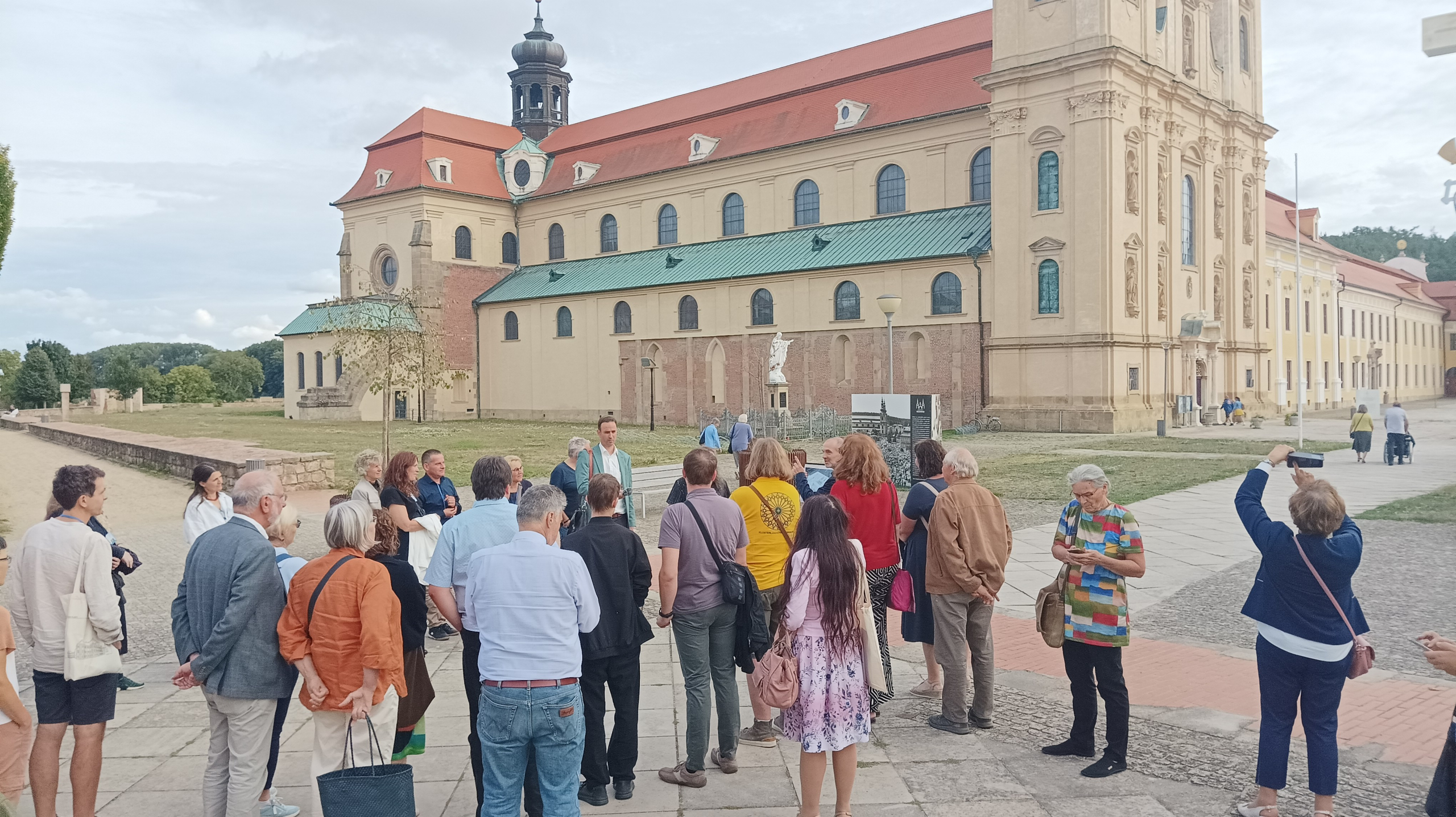


The cultural landscape
The monastery was named after the old center of Great Moravia, Veligrad, and was to become the burial place of the Margraves of Moravia. Velehrad is located in the southern part of the Mars Mountains Nature Park (Chřiby). The hills surrounding the nature park consist of clay and sandstone rocks and are covered with dense deciduous forests.
The five-nave Romanesque monastery church of the Assumption of the Virgin Mary was solemnly consecrated in 1228 in the presence of the Czech king Přemysl Otakar I. After the monastery was destroyed by fire during the Hussite Wars, it was rebuilt between 1587 and 1592 under Abbot Eckardt von Schwoben. It was again badly damaged during the Thirty Years’ War and in 1681. Between 1685 and 1735, the Italian Baroque master builder Giovanni Pietro Tencalla completed the magnificent new construction of today’s monastery church. After the abolition of the monastery in 1784, the church initially served as a village church and was soon left to decay. In 1890, the institution became the property of the Jesuit order, which founded a church grammar school here
. In 1928, the monastery church was elevated to the status of basilica minor under Pope Pius XI. During the communist regime, the monastery was dissolved again in 1950, but was returned to the Jesuits after 1990. In the same year, Pope John Paul II visited the monastery. Thanks to its connection to the legacy of Cyril and Methodius, Velehrad is now one of the country’s most important pilgrimage sites.
Text: MAS Buchlov/Cisterscapes / Photo: MAS Buchlov

Talking Stones
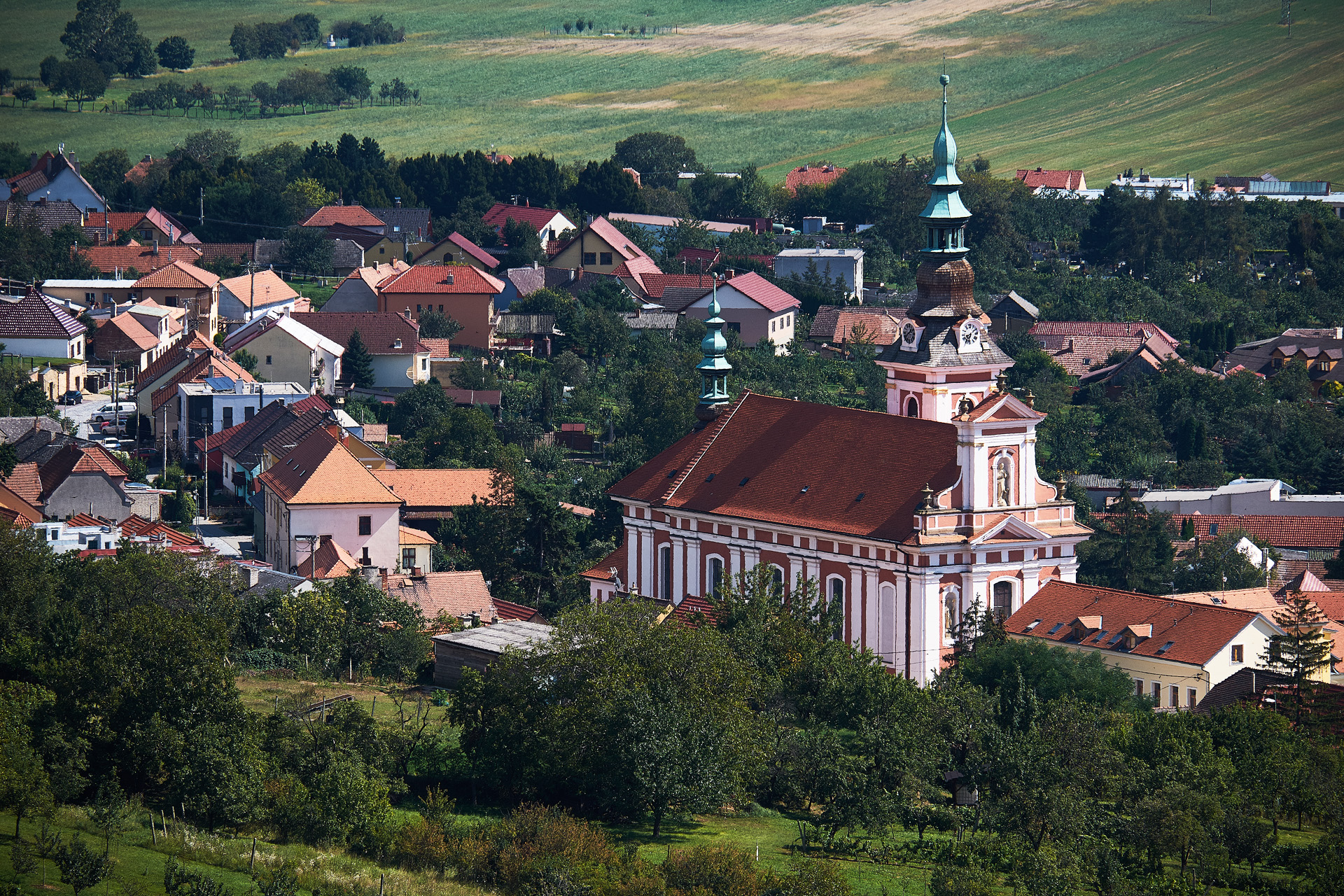
Church of St. Peter and Paul in Poleš
Polešovice – Baroque Church of Sts. Peter and Paul, built during the tenure of Abbot Josef Malý at a cost of 36,000 gold coins + Baroque rectory: 49.0346767N, 17.3411211E
Church of Sts. Peter and Paul in Polešovice
The most imposing church in the monastery estate is a true “Baroque cathedral” of the region. Its grandeur reflects the wealth and prestige of Polešovice, which has been a proud market town since the late 16th century.
The present-day building, constructed between 1725 and 1734, stands on a site with an ancient tradition that may date back to the time of Great Moravia. The same Italian masters who worked on the Basilica of Velehrad were responsible for its decoration. A unique link to the monastery is the painting of the Assumption of the Virgin Mary in the nave—it was originally intended for the high altar in Velehrad, and its creator is believed to be Paolo Pagani. The church is thus not only a place of prayer but also a gallery of High Baroque art.
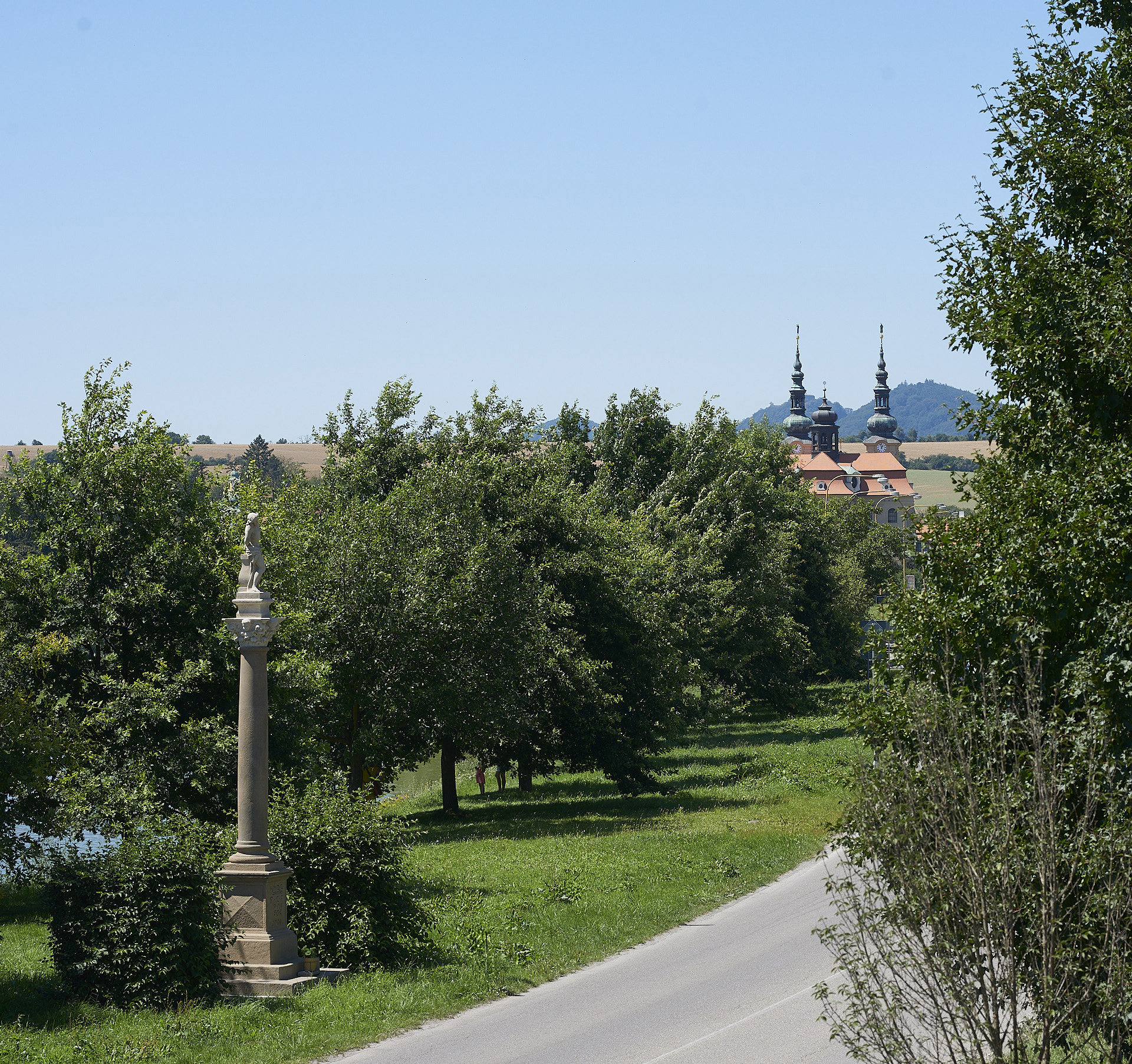
Column with the Statue of the Suffering Christ outside Velehrad
The column with the statue of the Suffering Christ in front of Velehrad
The Baroque column, dating from 1703 and featuring an impressive statue of the “Son of God,” once welcomed pilgrims and carters at a strategic crossroads. It stands at the fork in the road leading to the monastery and to Uherské Hradiště, where the old trade route that led over the Chřiby Mountains to Bunč also began.
Until 1898, the column stood on the opposite side of the street. Its dedication remains a matter of debate to this day—it was erected either at the expense of Velehrad Abbot Florian Nezorin himself or of the monastery’s cellar master, Constantin Friedl. The depiction of the suffering Christ, known as *Ecce homo* (“Behold the Man”), deeply reflects Cistercian spirituality, which strongly emphasized Christ’s humanity and his solidarity with the human condition. For generations, however, the locals have simply referred to this extraordinary monument as the “Son of God” (Boží Syn).
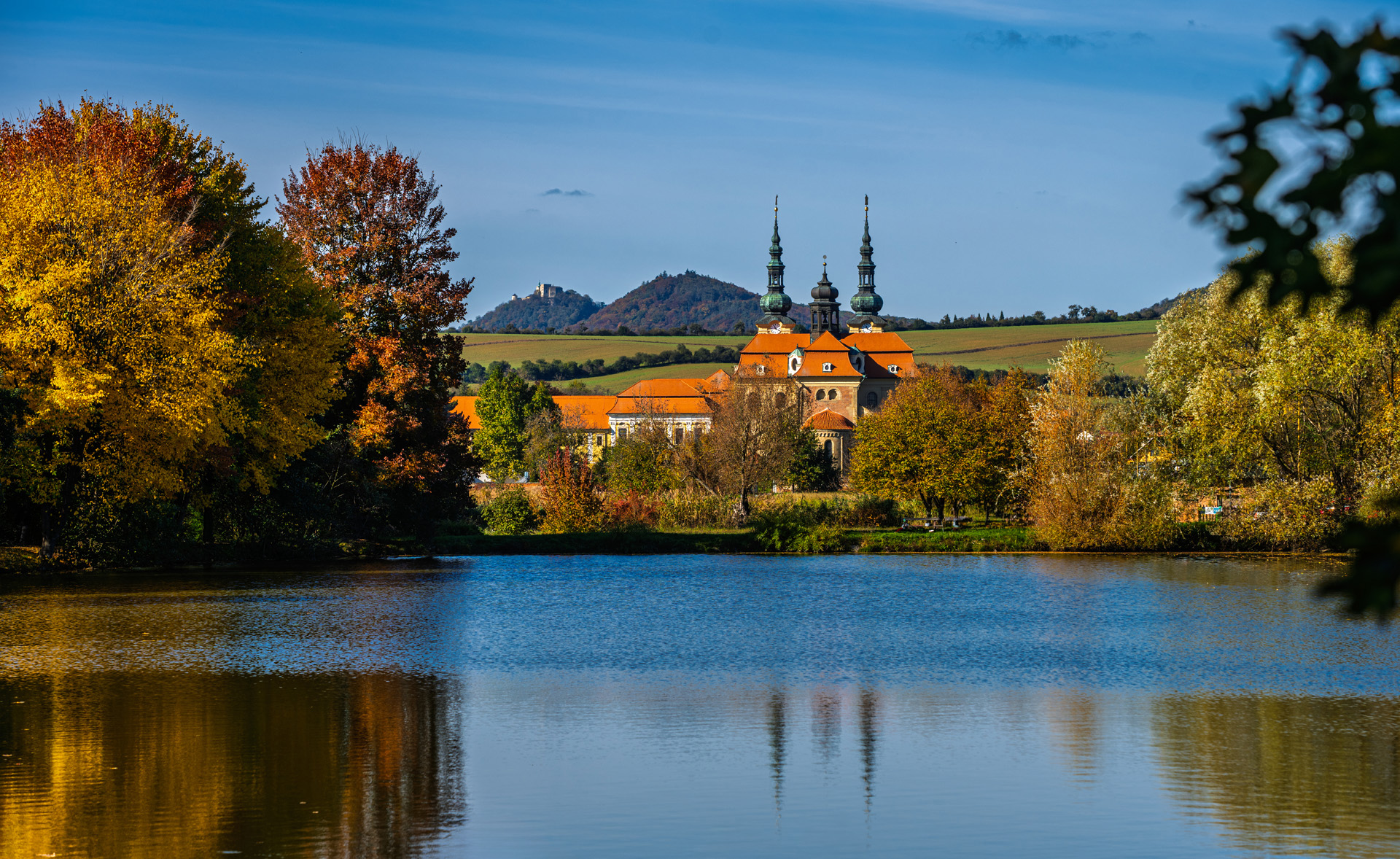
Velehrad Monastery
The Konvent Pond
Although fish farming in Velehrad was not a dominant economic sector, a sophisticated system emerged here in the 16th century that transformed the valley near the monastery into a modern system of fish ponds.
While fishing in the nearby March River required luck and skill, the ten-hectare Konventsteich was part of a planned mass production system within the overall pond network in the Salaška watershed. It was fed by water from a tributary near the village of Modrá. The pond disappeared at the beginning of the 18th century, when pond farming was no longer profitable. Today, smaller bodies of water such as the Konventní and the Žabinec—which cover only a fraction of the original area—serve as a reminder of this former glory.
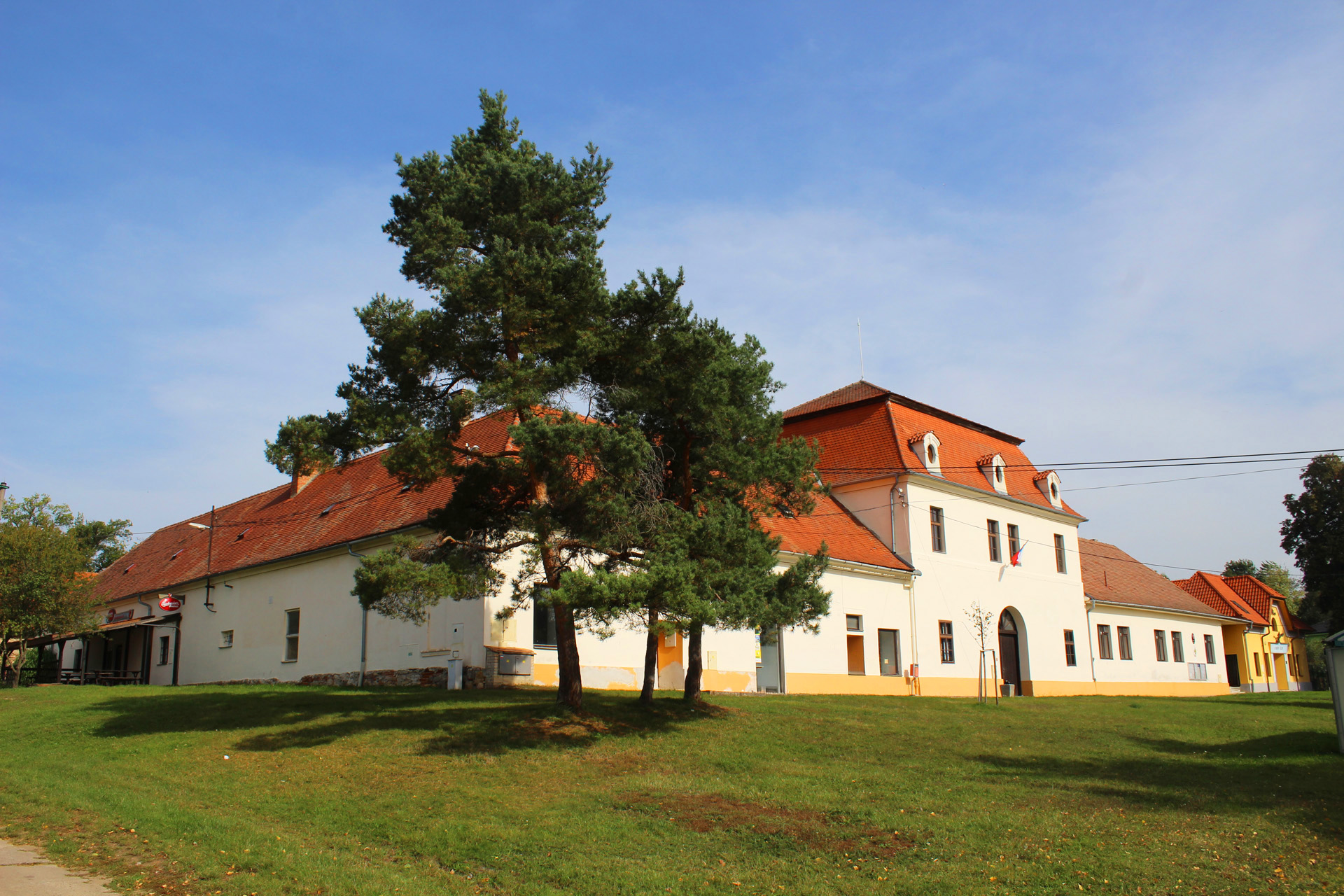
Former Grange in Domanín
Domanín – a former farmstead with a square layout: 49.0022711N, 17.2852319E
Farm in Domanín
The typical square courtyard in Domanín is one of the few surviving examples of a monastic estate. Even after centuries, it has retained its enclosed layout, which bears witness to intensive farming.
The monks founded the estate as early as the Middle Ages, but lost it after the Hussite Wars. It was not until the 17th century that Abbot Jan Greifenfels regained it and incorporated the surrounding wasteland into the estate. His successors gave the building its Baroque appearance. The estate reached its peak in the mid-18th century—it cultivated extensive fields and vineyards, and herds of nearly 500 sheep grazed on the local meadows. Although the outbuildings have undergone renovations, the main building has retained its original historical character to this day, and the entire complex remains a unique testament to the Cistercian Baroque landscape.
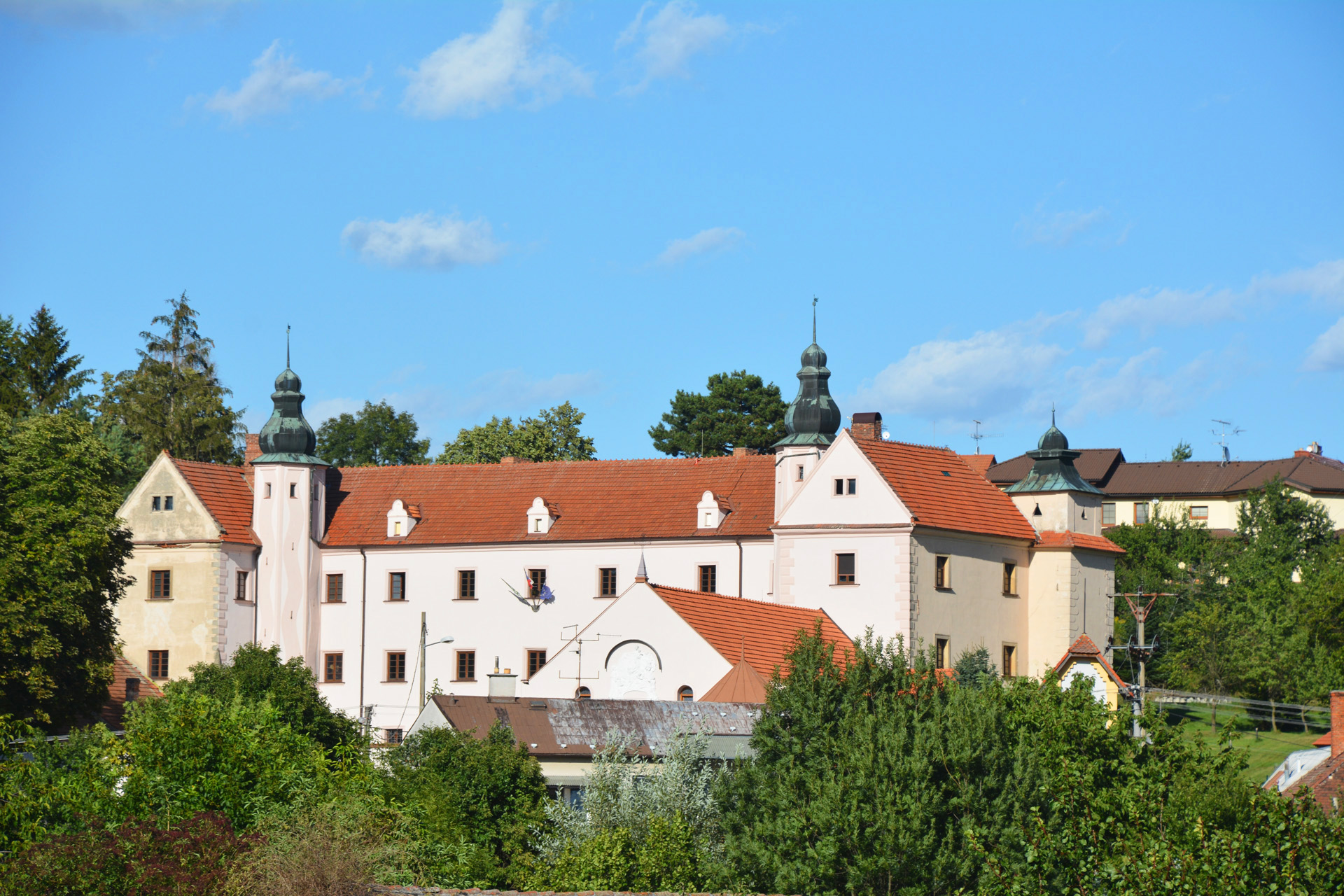
Ořechov Castle
Ořechov – the castle’s summer residence and economic administration center: 49.0308756N, 17.3024558E
Ořechov Castle
The Baroque castle in Ořechov served as a strategic economic center for the monks of Velehrad, but also as an oasis of tranquility. Thanks to its favorable climate, it became a popular summer retreat and a “monastic spa.”
The monks acquired the castle along with the entire Ořechov estate during the Baroque period. In the 18th century, they operated a health resort here based on drinking sheep’s whey (žinčice) and spending time in the fresh air. However, the castle was also an industrial hub—one wing housed a brewery, and the grounds included a large farmyard with the Linhorn wine cellar. After the monastery was dissolved in 1784, the last abbot of Velehrad, Filip Zuri, may have lived here for some time. Today, the property is privately owned.
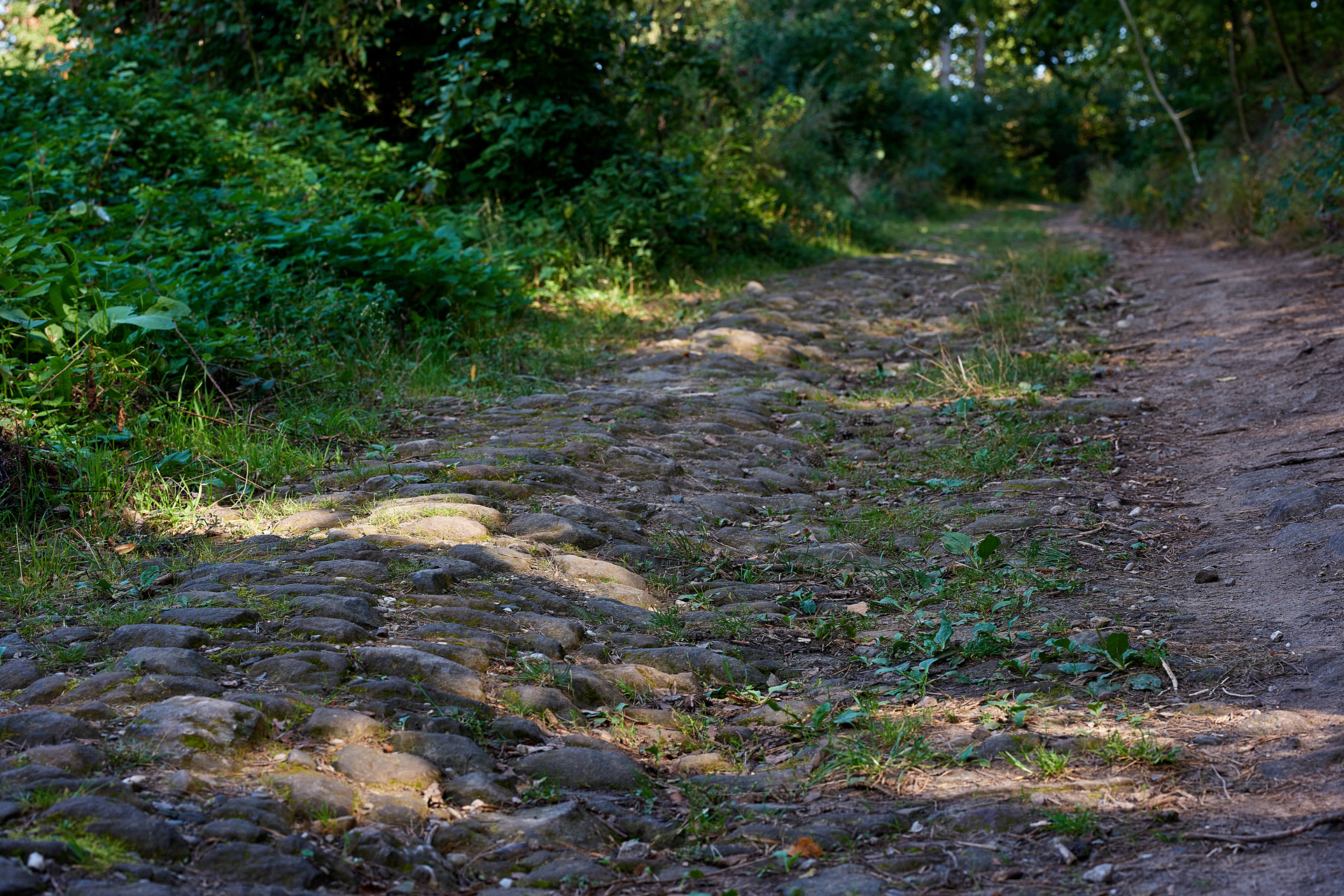
Paved Road in Háj
Cobblestone path in Háj
This 700-meter-long section, paved with sandstone, illustrates how important it was to keep the paths near the monastery passable year-round, even in difficult terrain.
Paving the road was not a matter of luxury, but of necessity. In the soft, erosion-prone loess soils, ordinary paths quickly turned into deep, impassable ruts. The monks therefore had the path paved, thereby preventing further erosion and ensuring safe passage for wagons in all weather conditions. The paving ends exactly at the edge of the Háje Forest, where the terrain transitions into the plain, and thus represents a remarkable example of historical transportation engineering.
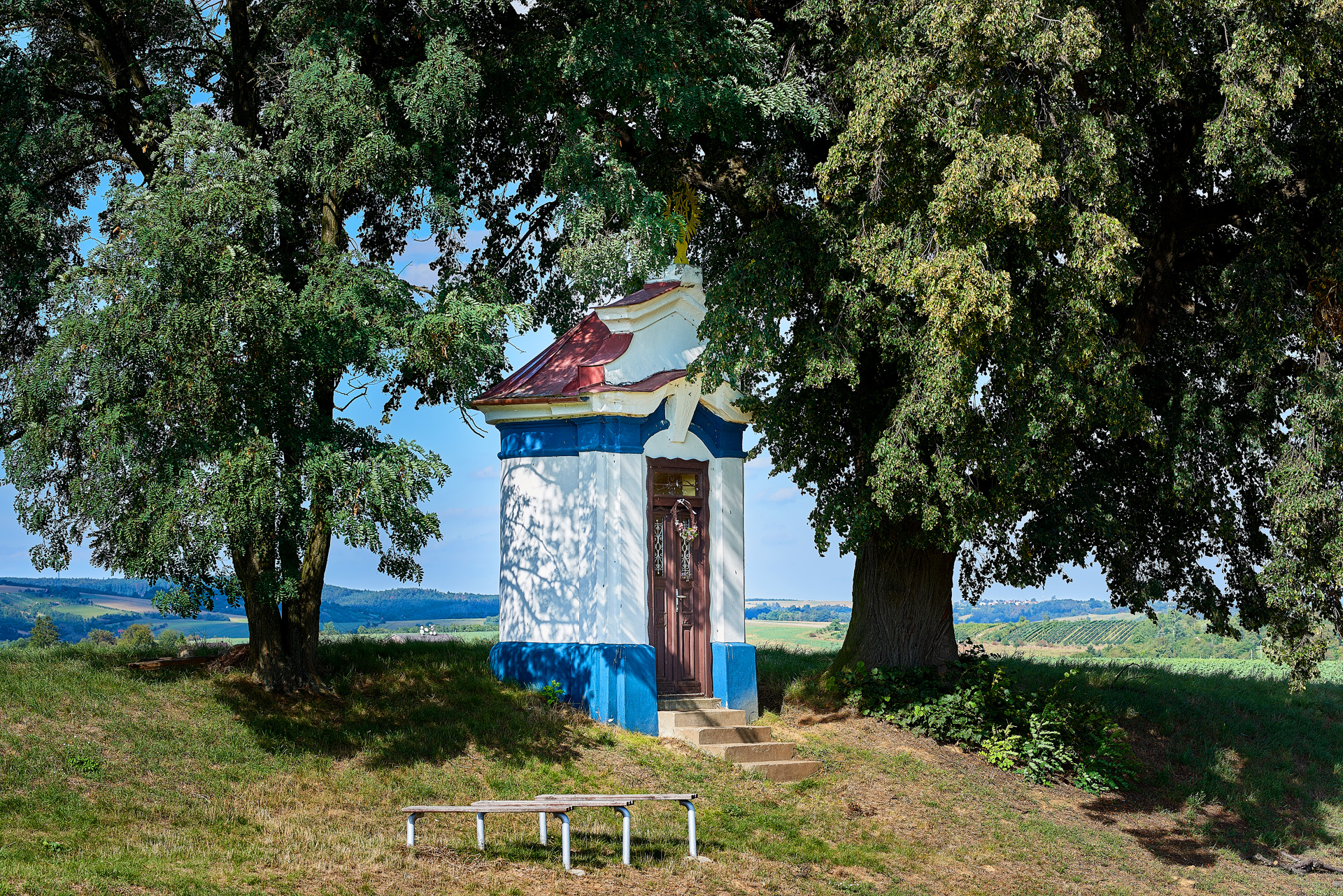
The Chapel Above Jalubí
A Baroque niche chapel dedicated to Our Lady of Sorrows, dating from 1737, situated above the village and flanked by a linden tree: 49.1142414N, 17.4183572E
The Chapel Above Jalubí
The picturesque niche chapel above the village of Jalubí is an example of a small sacred structure that served both as a place of worship and as an important landmark in the landscape.
The Chapel of Our Lady of Sorrows dates back to 1737 and stands at a spot where seven paths once crossed. One of these paths led down to the lower mill and from there on to the monastery. Although this network of paths disappeared during the insensitive land consolidation, the place has retained its charm. A distinctive feature is the stately linden tree that stands next to the chapel; its ancestors may have stood here even before the chapel was built. It is a place that has always been significant to travelers.
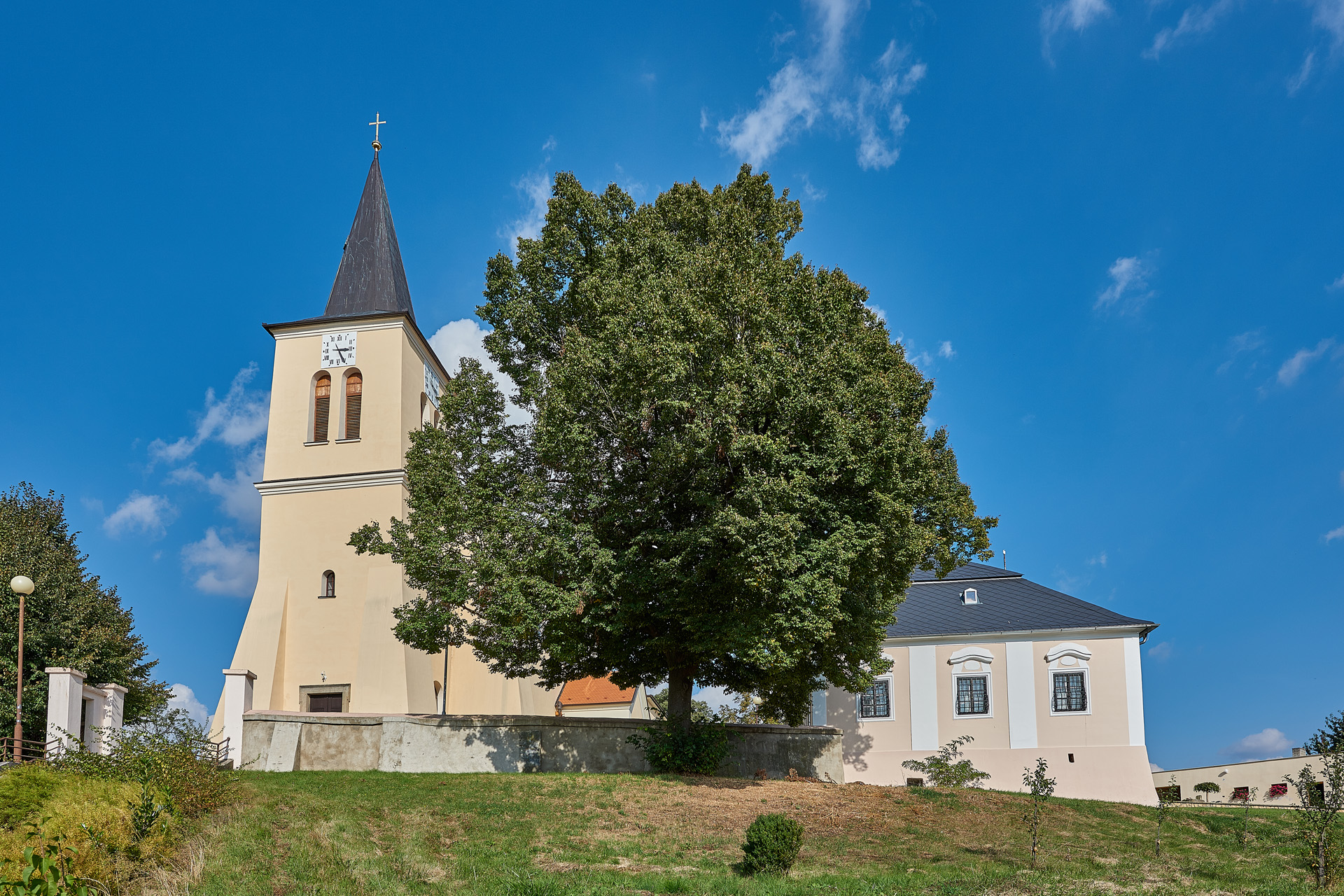
The Church Complex in Boršice
Boršice – Baroque Church of St. Wenceslas and Baroque rectory: 49.0629211N, 17.3527336E
The Church Grounds in Boršice
The Baroque St. Wenceslas Church and the adjacent 18th-century rectory are a striking landmark of the community and served as a spiritual center for the wider region for centuries. The entire area was a key part of the Velehrad domain and a base for the monks there, for whom living outside the monastery walls offered, on the one hand, a freer life, but on the other hand, also posed certain dangers.
The monks built the first church here around 1250 for the residents of Boršice, Zlechov, Tupesy, and Tučapy. Although the church was burned down by the Hussites in 1421, it was rebuilt in the Gothic style, and a stone baptismal font in the narthex beneath the tower still serves as a reminder of its earliest history. The parish’s jurisdiction extended far into the region, as evidenced to this day by the historic “church paths” crisscrossing the countryside, along which people traveled to baptisms and weddings or accompanied the deceased to the local cemetery. Among the most notable clergymen of Boršice were the Baroque scholar and composer Kristián Hirschmentzel, as well as the martyr Wenzel, who was killed here during the Hussite Wars. Until 1950, the local rectory also served as a central archive, where the fates of all residents—from birth to death—were recorded in its registers.
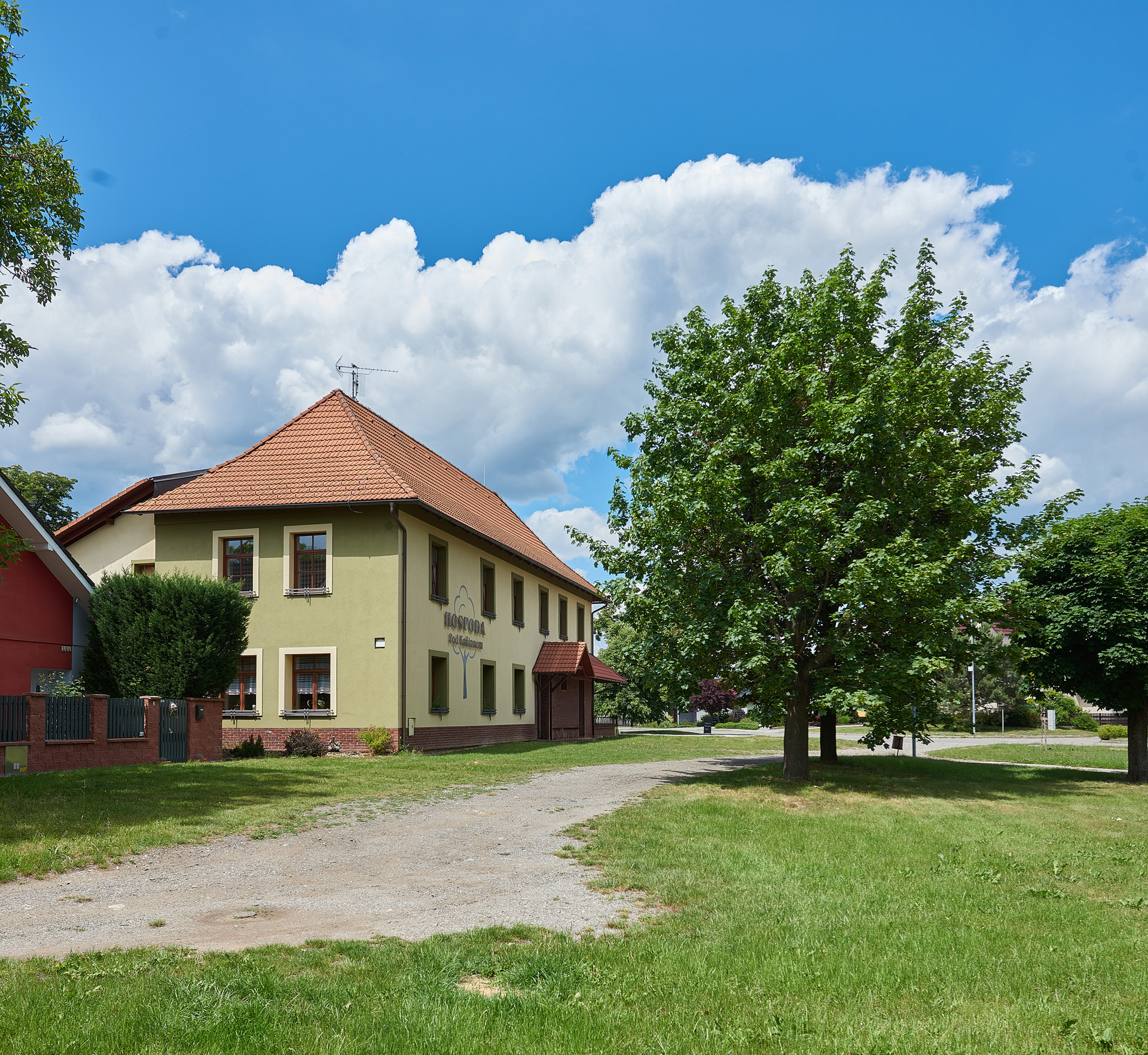
The Coaching Inn in Nedakonice
Nedakonice – Village Green
The Velehrad Monastery acquired the village shortly after its founding, in 1220, from Bishop Robert of Olomouc. Its location in the floodplain of the March River and along a trade route determined its economic importance. The monastery built a mill on a branch of the river that, thanks to the abundant water supply, could operate year-round. Associated with it were other businesses—a sawmill, an oil press, and an inn.
The Hussite Wars caused severe damage to the village; the Hussites set up camp near Nedakonice. It was not until the 17th century that the monastery succeeded in restoring Nedakonice to prosperity. The original urban layout has been preserved to this day in the former village green, which is now bordered by Dědina I and Dědina II streets. The mills are gone; in their place stands the Church of St. Florian. However, the former Baroque inn—later known as the “Volkshaus”—has been preserved. Following modern renovations, it now serves as the Pod Kaštany Inn—a tradition of hospitality that has endured here for nearly four centuries.
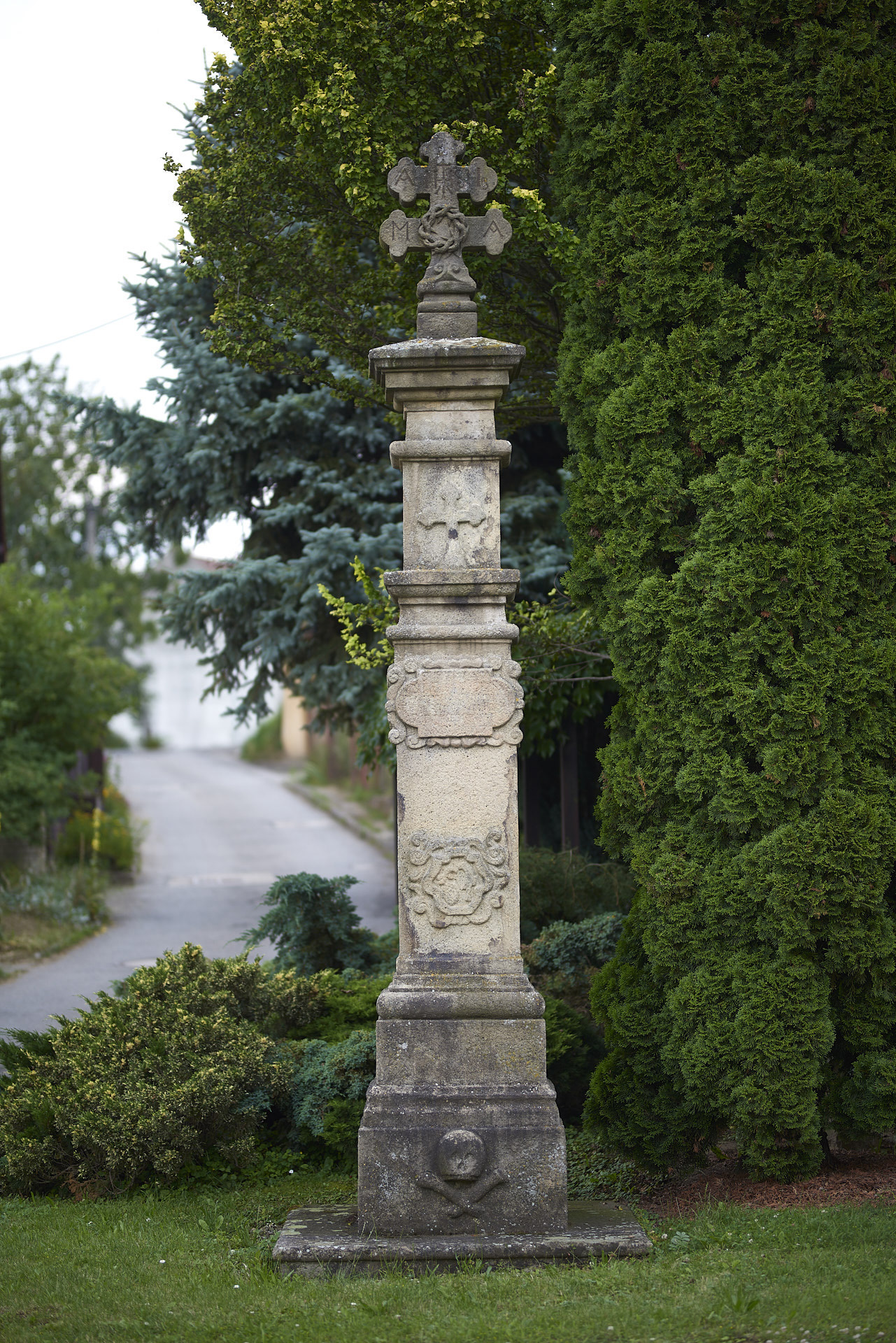
The Stone Cross in Tupesy
Tupesy – a stone cross in Tupesy dating from 1677, located along the historic road to Boršice: 49.0832708N, 17.3658633E
The Stone Cross in Tupesy
The cross in Tupesy, dating from 1677, marks the historic path to the church in Boršice and bears the oldest depiction of the parish coat of arms in existence. For centuries, it served as a central landmark for locals on the path they regularly took to attend church in Boršice.
This Baroque gem was erected at the behest of a member of the Velehrad Convent. The central part of the cross is decorated with motifs from the parish seal—a bunch of grapes and a winegrower’s knife. A Latin inscription is also carved on it: SUPREMAE MAJEST[ATI] HON[ORI] ET GL[ORIAE] SS[T]RIADIS HOC MONUMENTUM ERECTUM PROCUR[ATIONE] E. D. M. F. EX C[ONVENTU] WELLE[HRADENSI] ANNO 1677 (To the Supreme Majesty, for the honor and glory of the Most Holy Trinity, this monument was erected through the care of E. D. M. F. from the Convent of Velehrad in the year 1677). At the base of the cross is a skull, serving as a reminder of human mortality. It is quite possible that here at the cross, a final farewell was played for the deceased and a prayer of reconciliation was offered before the bereaved accompanied him to the cemetery in Boršice.
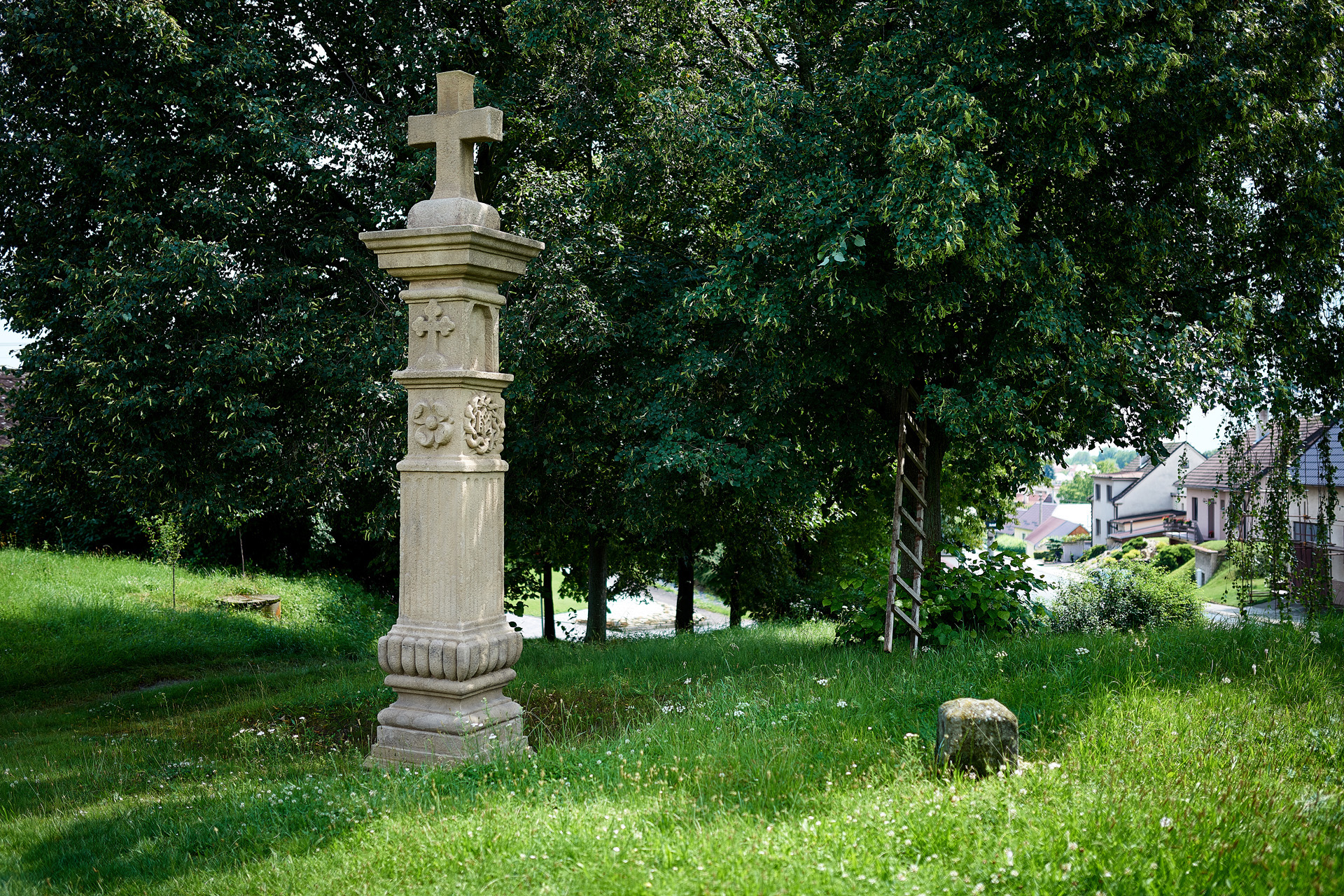
The Stone Cross in Zlechov
Zlechov – a stone cross from 1674 located above the wine cellars: 49.0758583N, 17.3788656E
The Stone Cross in Zlechov
The cross, dating from 1674, is one of the oldest in the Zlín region. To this day, it lends the landscape a picturesque, cozy, and sacred atmosphere.
Crosses were not only used for prayer but also served as important landmarks for pilgrims and merchants, as evidenced by their strategic placement at major road intersections. The Zlechov Cross was erected by Adam Mirandula, Prior of Velehrad, on a hill above a sunken path lined with wine cellars, directly at the intersection of the roads leading to Tupesy and Velehrad. The cross bears the Latin inscription MEMENTO MORI HOMO ET DISCE MORI—“Remember death, O man, and learn to die.” The question remains whether it was intended to remind people at the time of the horrors of a plague epidemic they had survived, or whether, from its vantage point above the wine cellars, it was meant simply to offer a wise admonition to passersby to practice moderation.