Gołańcz
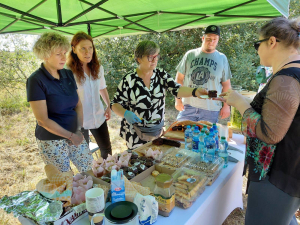
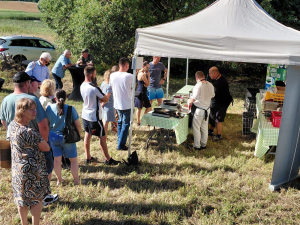
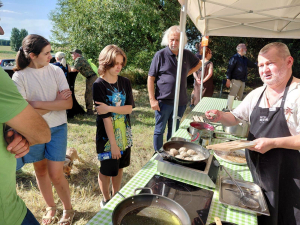
An afternoon filled with history, music, culinary delights, and attractions for the whole family. That’s how Gołańcz Castle presented itself at the opening of the “Weekend on the Piast Trail,” featuring a lecture on medieval cuisine—including a tasting—a concert, and a guided tour. The evening began with a journey into the cuisine of days gone by. Participants listened to stories about medieval culinary customs and learned about dishes that were served centuries ago on the tables of the inhabitants of the Piast territories. A tasting was also a must—the cabbage soup, cooked with pork ribs and served with a pretzel, served as a reminder that hearty soups, grains, and fish formed the basis of the daily diet for centuries. To round off this culinary journey, participants were treated to homemade pastries and sweets prepared by the “Smogulanki” rural women’s association from Smogulec.
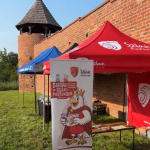
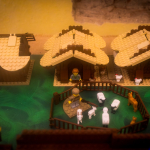
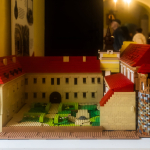
The booth of the “Kasztelanki”—a regional women’s group from Greater Poland that is active in the Ostrowska Kasztelania region around Lake Lednica—drew a great deal of interest. The women spoke passionately about herbal traditions and demonstrated how many old customs can still be successfully preserved and put to use today. The youngest participants enthusiastically took part in the prepared activities. They built the “Orzeł Piastowski”—the mascot of the Piast Trail—out of LEGO bricks and designed their own models of Gołaniec Castle, learning about history through creative play.
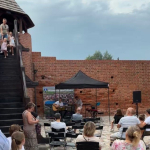
A special highlight of the program was a presentation of musical instruments prepared by Konrad Rogiński, a composer of film and video game music. Participants were able to admire both original, centuries-old instruments—some even older than the castle of the Pałuki noble family itself—and modern creations made from everyday objects. Vivid stories about their history and sound provided an excellent prelude to the concert by Grzegorz Tomaszewski, who was accompanied by Piotr Bojarski and Piotr Drążkiewicz. The audience heard pieces inspired by ancient and folk music, and a special highlight was the world premiere of two compositions based on recordings made by Oskar Kolberg during his stay in Czeszewo.
Throughout the evening, visitors could also take a guided tour of Pałuki Castle to learn about its history and see the results of the recently completed renovation. The information booths for the Piast Trail and the Gołańcz Cultural Center also drew a great deal of interest; they offered publications, maps, brochures, and promotional materials about Gołańcz and the Gołańcz region.
It is also encouraging that many participants took advantage of the free transportation from Wągrowiec. We would like to thank the Wągrowiec County Administration for its cooperation and support of this initiative.
However, this event had far greater significance than just a rich cultural program. It offered an excellent opportunity to showcase Gołańcz’s potential as a place with a unique historical heritage. The restored Pałuk family castle, whose history dates back to the Middle Ages, fits quite naturally into the history of the early Polish state and the legacy of the first Piasts.
This large number of visitors has shown that history not only teaches, but also inspires, brings people together, and encourages us to discover places we can be proud of.
Wągrowiec
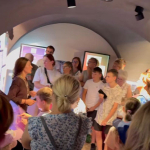
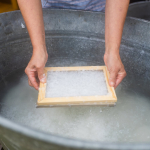
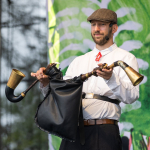
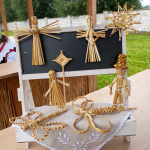
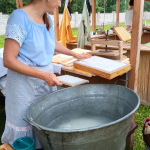
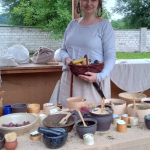
The Regional Museum in Wągrowiec had organized numerous interesting workshops; exhibitors showcased their crafts and regional products; and the former Cistercian monastery opened its historic rooms to all visitors. It was an excellent opportunity to combine history, culture, and local traditions.
Łekno
A Unique Sunday in Tarnowo Pałuckie
Following Friday’s gathering at the castle in Gołańcza and the Cistercian Festival in Wągrowiec on Saturday, another event dedicated to the Cistercian heritage took place on Sunday, August 2, 2026, in Tarnów Pałucki. Participants had the opportunity to explore this tradition from various perspectives—through music, archaeology, cuisine, and ancient herbalism.
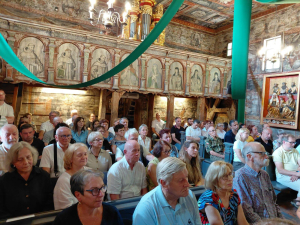
At 2:00 p.m., the concert “Renaissance and Baroque Organ Music,” performed by Dr. Joanna Nowak, took place at St. Nicholas Church in Tarnów Pałucki. We would like to thank Father Marek Rerk for his kindness and for making it possible to hold the concert in the church’s historic interior. The music of bygone eras created an extraordinary atmosphere that transported the audience into the world of Cistercian spirituality and aesthetics.
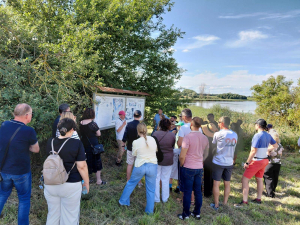
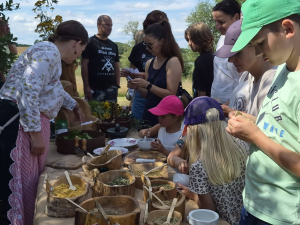
Afterward, starting at 3:15 p.m., the event moved to the Ł3 “Klasztorek” archaeological site. There, participants were treated to a guided tour led by Marcin Moeglich, who introduced them to the history of one of the region’s most significant archaeological sites, which is closely linked to the Piast era. The next item on the program was the cooking demonstration “Carp in the Monastery Kitchen,” prepared by Zbigniew Kmieć in collaboration with the “Skrzynka” Institute. The demonstration highlighted the significant influence the Cistercians had on the development of pond farming and the spread of carp breeding—a fish firmly rooted in Polish culinary tradition. At the same time, herb workshops led by Wiesława Gruchała took place. Participants learned about the plants used by the monks in the kitchen, in medicine, and in everyday life, and also had the opportunity to make their own aromatic herb salt.
There were also plenty of sweet treats, prepared by the rural women’s associations from Bracholin, Łekno, Tarnowo Pałuckie, and Ochodza. The entire event demonstrated that the legacy of the Piasts and Cistercians can be experienced with all the senses—by listening to music, discovering traces of the past hidden in the earth, sampling traditional dishes, and exploring the secrets of monastic farming.
Photos and reports: Gołańczy Castle, Regional Museum in Wągrowiec, Wągrowiec Municipality